Quick summary
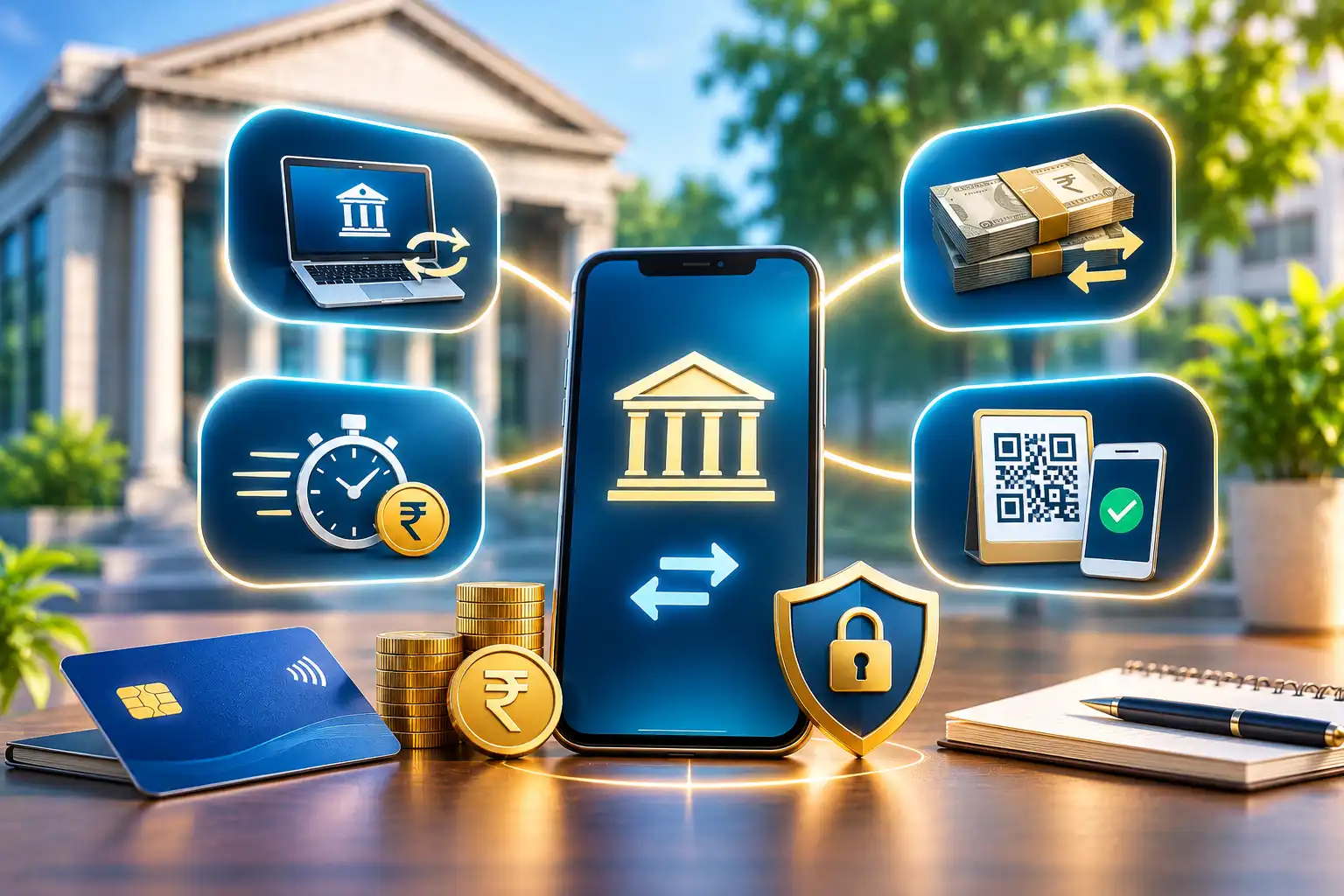
What is UPI? Unified Payments Interface enables instant digital payments between participating bank accounts, 24×7.
How it works: Users can transfer money through UPI IDs, QR codes, and supported banking applications.
Transaction limits: Regular person-to-person transfers are generally limited to ₹1 lakh, while certain eligible merchant categories allow up to ₹5 lakh per transaction.
Security: Never share your UPI PIN or OTP, and always verify recipients before making payments.
Fraud reporting: Report suspicious transactions immediately to your bank and through the national cybercrime helpline, 1930.
Unified Payments Interface (UPI) has transformed the way people in India send, receive, and manage money. From paying ₹20 at a roadside tea stall to transferring thousands of rupees to family members, UPI makes digital payments convenient and accessible.
With a smartphone and a UPI-enabled bank account, users can transfer money within seconds without remembering lengthy bank account numbers or IFSC codes for every transaction.
However, as UPI usage grows, understanding transaction limits, payment security, and common fraud techniques has become increasingly important.
This guide explains what UPI is, how it works, its transaction limits, charges, benefits, and essential safety precautions for Indian banking customers.
What Is UPI?
UPI stands for Unified Payments Interface.
It is an instant payment system developed by the National Payments Corporation of India (NPCI), operating within India's regulated payment ecosystem.
UPI allows users to transfer money between participating bank accounts through supported mobile applications.
Unlike traditional bank transfers that may require an account number and IFSC code, UPI commonly enables payments using a UPI ID, mobile-number-based discovery, or QR code.
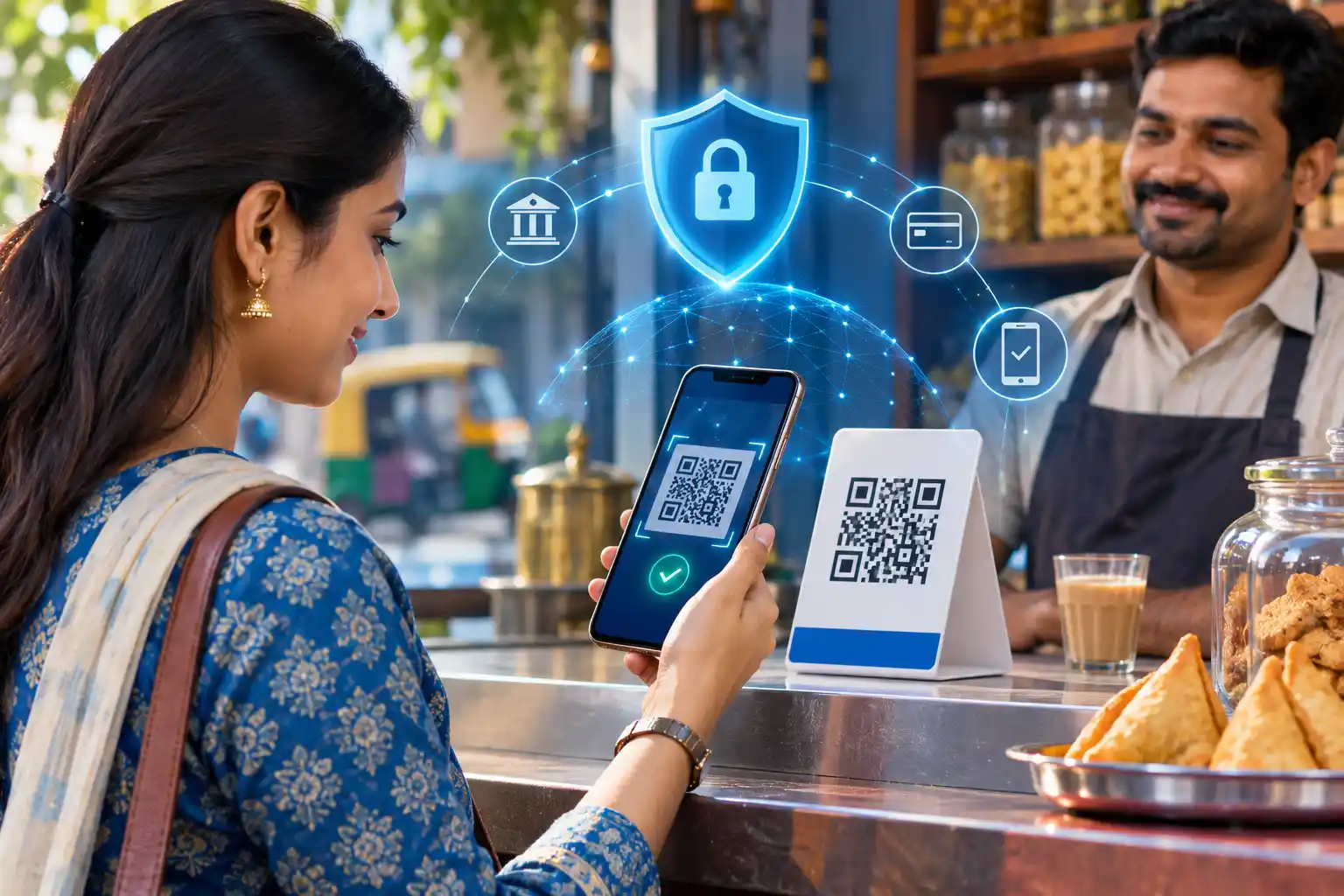
For example, a customer can pay a shopkeeper by scanning a QR code, entering the amount, verifying the recipient's details, and authorising the payment.
The funds are generally transferred directly between the linked bank accounts.
Key Features of UPI
- Instant digital payments
- Availability 24 hours a day, including weekends and holidays
- Transfers between participating banks
- Payments through UPI IDs and QR codes
- Multiple bank accounts supported within compatible applications
- In-store and online merchant payments
- Support for recurring payments through UPI AutoPay
- Security through device verification and payment authentication
UPI has become a central component of India's digital payment infrastructure.
Who Operates and Regulates UPI?
Understanding the organisations involved in UPI helps clarify how the payment system operates.
National Payments Corporation of India (NPCI)
NPCI developed and operates UPI's central payment infrastructure, establishes operating rules, and coordinates participating payment service providers.
Reserve Bank of India (RBI)
The RBI regulates payment systems in India and oversees the broader framework within which UPI operates.
Banks
Participating banks maintain customer accounts, process transactions, apply security controls, and provide customer support.
UPI Applications
Applications such as BHIM, Google Pay, PhonePe, Paytm, and supported banking apps provide customer-facing interfaces for initiating and managing UPI payments.
The availability of individual features may vary depending on the app and participating bank.
How Does UPI Work?
UPI connects banks and payment applications through a common payment infrastructure.
When a user initiates a payment, the UPI network facilitates communication between the relevant institutions so that the payment can be authorised and processed.
Step-by-Step Example
Suppose Rahul wants to send ₹2,000 to Priya.
Step 1: Open a UPI application
Rahul opens his preferred UPI-enabled banking or payment application.
Step 2: Select the recipient
He selects Priya using an available payment method, such as her UPI ID or verified recipient details.
Step 3: Enter the amount
Rahul enters ₹2,000.
Step 4: Verify the recipient
Before proceeding, he checks the recipient's displayed name and payment details.
Step 5: Authorise the transaction
Rahul authenticates the payment using the method supported by his bank and application, commonly his UPI PIN.
Step 6: Payment processing
The payment request is processed through the participating institutions and UPI infrastructure.
Step 7: Confirmation
The application generally displays the transaction result, while the participating banks update the relevant account balances.
Successful UPI payments ordinarily complete within seconds, although network or banking issues can sometimes cause delays.
What Is a UPI ID?
A UPI ID, also called a Virtual Payment Address (VPA), is an identifier associated with a UPI payment account.
It allows users to make or receive payments without sharing their full bank account number for every transaction.
An illustrative UPI ID might look like:
customername@bankhandle
The exact structure and handle depend on the payment service provider.
A UPI ID does not itself reveal a user's UPI PIN.
However, users should still avoid unnecessarily sharing personal payment details with unknown individuals.
How to Set Up UPI for the First Time
The general registration process is straightforward.
- Install a trusted UPI-enabled application from an official app store.
- Open the application and complete the required mobile-number verification.
- Ensure the mobile number is registered with your bank.
- Select your bank from the list of participating institutions.
- Choose the bank account retrieved by the application.
- Create or set up your UPI PIN using the supported verification method.
- Complete registration and begin using UPI.
Depending on the bank and app, UPI PIN setup may support debit-card-based verification or other permitted onboarding methods, such as eligible Aadhaar-based verification.
Never share your UPI PIN, debit-card PIN, OTP, or other sensitive authentication details with another person.
What Is the UPI Transaction Limit in India?
UPI transaction limits depend on the type of payment, applicable NPCI rules, the participating bank, and sometimes the payment application's risk controls.
For ordinary person-to-person transfers, the standard limit is generally up to ₹1 lakh per transaction, subject to the bank's applicable restrictions.
Higher limits are available for certain approved payment categories.
UPI Transaction Limits: General Overview
| Transaction Category | General Limit or Rule |
|---|---|
| Regular person-to-person UPI | Generally up to ₹1 lakh |
| Eligible tax payments | Up to ₹5 lakh per transaction |
| Eligible hospital and education payments | Up to ₹5 lakh per transaction |
| Eligible IPO and RBI Retail Direct payments | Up to ₹5 lakh per transaction |
| Certain other verified merchant categories | Up to ₹5 lakh per transaction |
| UPI Lite | Separate low-value payment limits |
| UPI 123Pay | Separate transaction limits |
Higher limits apply only to eligible categories and participating payment arrangements.
Since September 2025, NPCI has provided higher per-transaction and cumulative limits for several specified verified-merchant payment categories.
For example, some approved categories support a ₹5 lakh per-transaction ceiling and a higher total payment ceiling over 24 hours.
Important: The maximum allowed by NPCI does not guarantee that an individual bank or UPI application will permit the same amount.
Banks may impose lower limits based on account type, internal policies, risk controls, or other considerations.
Is the UPI Daily Limit Also ₹1 Lakh?
For ordinary person-to-person payments, a common bank-account limit is ₹1 lakh over a 24-hour period.
However, different banks and applications may impose additional restrictions on:
- Number of transactions
- Maximum amount per transaction
- Total amount transferred over a specified period
- Recently registered accounts
- Newly linked devices
- Suspicious or unusual transactions
Users should confirm their actual limits within their banking or payment application.
What Is UPI Lite?
UPI Lite is designed to support convenient, low-value payments.
It enables eligible transactions using a Lite balance or supported mechanism rather than requiring the conventional UPI PIN flow for every small purchase.
Under the enhanced limits introduced in 2024:
- Maximum UPI Lite balance: ₹5,000
- Maximum individual UPI Lite payment: ₹1,000
These are scheme ceilings, and the features available to a customer may depend on the participating app and bank.
UPI Lite can be useful for frequent small purchases, such as transport fares or everyday retail payments.
Users should remember that UPI Lite transactions and funding arrangements may have different security and settlement characteristics from standard UPI bank-account transactions.
What Is UPI 123Pay?
UPI 123Pay was introduced to make UPI services accessible to users of feature phones and other supported non-smartphone channels.
It supports digital payments through mechanisms designed for customers who may not have access to a conventional smartphone UPI application.
The per-transaction limit was enhanced to ₹10,000.
The actual availability of particular 123Pay methods depends on participating providers and supported services.
UPI 123Pay contributes to wider digital financial inclusion in India.
What Is UPI AutoPay?
UPI AutoPay allows users to authorise recurring payments through supported mandates.
Examples include:
- Subscription payments
- Insurance premiums
- Recurring bills
- Loan instalments through eligible arrangements
- Other permitted recurring payment categories
Once an eligible mandate is approved, payments can be initiated according to its authorised conditions.
The authentication and execution requirements may vary depending on the mandate amount and applicable rules.
Users should regularly review active mandates and cancel those they no longer need.
Is UPI Free?
Ordinary UPI transfers between individuals are generally free for customers.
Merchant payment arrangements are more complex.
Under the payment framework clarified by the Ministry of Finance in September 2026, ordinary person-to-person UPI transfers remain free, while merchant discount rate provisions apply to specified merchant transactions.
Merchant discount rate, or MDR, is a charge associated with the merchant payment acceptance system.
It should not be confused with a fee automatically payable by every person making a UPI payment.
Customers should review any separately disclosed fees relating to special payment products or services.
Is UPI Safe?
UPI uses regulated banking infrastructure and multiple security mechanisms.
These can include:
- Mobile device and SIM verification
- Customer authentication
- UPI PIN protection
- Transaction monitoring
- Bank-level fraud detection
- Secure communication between payment participants
However, no digital payment system can eliminate the risk of scams or user deception.
Many UPI frauds involve social engineering, where criminals persuade users to authorise payments or disclose sensitive information.
Understanding these techniques is essential.
Common UPI Frauds and How to Avoid Them
1. Fake Payment Collection Requests
Fraudsters may send a payment request while claiming that the user must approve it to receive money.
A victim who approves the request and authenticates the payment may transfer funds to the fraudster.
Safety tip: Do not approve an unexpected payment request. Receiving an ordinary UPI bank transfer does not require entering your UPI PIN.
2. QR Code Scams
A scammer may claim that scanning a QR code will allow you to receive a refund, prize, or payment.
In reality, scanning a payment QR code may initiate a transfer to the recipient represented by the code.
Safety tip: Scan QR codes only when you intend to make a payment, and verify the recipient and amount before authorisation.
3. Fake Customer Support Numbers
Fraudsters sometimes advertise fake bank or payment-app support numbers through websites, advertisements, and social media.
They may ask for authentication information or instruct users to install remote-access applications.
Safety tip: Contact support through the official bank website or the support section of the genuine payment application.
4. Screen-Sharing and Remote-Access Scams
Criminals may persuade users to install screen-sharing or remote-control software.
They can then observe sensitive information or manipulate the user's device.
Safety tip: Never give an unknown person remote access to your banking device.
5. Fake Cashback and Reward Messages
Fraudsters may promise cashback, lottery winnings, refunds, or rewards in exchange for opening suspicious links or authorising a payment.
Safety tip: Verify any offer directly within the trusted application. Do not enter a UPI PIN to receive a supposed reward.
6. Fake Payment Screenshots
A customer or merchant may be shown a fabricated screenshot claiming that a UPI payment succeeded.
Safety tip: Confirm receipt of funds through your own bank account, transaction history, or trusted merchant payment notification rather than relying only on a screenshot.
Essential UPI Safety Tips
Following a few basic precautions can significantly reduce the risk of payment fraud.
1. Never share your UPI PIN. Banks and legitimate payment providers do not need your PIN for customer support.
2. Verify the recipient. Check the displayed recipient name and amount before authorising a payment.
3. Do not enter your PIN to receive money. Normal incoming UPI payments do not require the recipient to authorise a debit.
4. Avoid unknown links. Fraudulent links may lead to fake payment pages or malicious applications.
5. Use trusted applications. Install banking and payment apps only from official sources.
6. Keep your phone updated. Security updates help protect against known vulnerabilities.
7. Enable a strong screen lock. Protect the device with an appropriate PIN, password, or supported biometric authentication.
8. Review account notifications. Monitor SMS alerts and banking transaction history for unexpected debits.
9. Check active mandates. Review recurring payment permissions and remove those no longer required.
10. Report suspicious transactions quickly. Prompt reporting may improve the possibility of restricting further losses or recovering funds.
What to Do If You Send Money to the Wrong UPI ID
Sending money to an incorrect recipient can be difficult to reverse.
UPI payments are generally processed in real time and ordinarily cannot be cancelled once successfully completed.
If you have sent money to the wrong recipient:
- Check the transaction history and confirm the payment status.
- Record the transaction reference number, amount, date, and recipient details.
- Raise a complaint through your UPI application.
- Contact your bank and request assistance with a wrong-credit dispute.
- Follow the relevant bank or payment-system grievance process.
Recovery is not guaranteed, especially when funds have been successfully transferred to a valid account.
For this reason, verifying recipient details before making a transfer is particularly important.
What If a UPI Transaction Fails but Money Is Debited?
Occasionally, a transaction may fail or remain pending even though the sender's bank account shows a debit.
This can happen because of technical issues, delayed responses, or problems at a participating institution.
If this happens:
- Check the transaction status in the UPI application.
- Avoid immediately repeating the transaction without confirming whether the first payment succeeded.
- Note the transaction reference number.
- Monitor the account for an automatic reversal.
- Raise a complaint through the application or bank if the reversal is delayed.
Applicable RBI turnaround-time rules prescribe timelines and compensation arrangements for certain failed payment transactions.
The exact timeline depends on the type of transaction and the applicable regulatory category.
Do not assume that every pending transaction has failed or that every debited amount will be reversed immediately.
How to Report UPI Fraud in India
If you suspect that money has been transferred fraudulently, act immediately.
Step 1: Contact Your Bank
Use the bank's official fraud-reporting channel and request appropriate action to protect your account.
Step 2: Call the National Cybercrime Helpline
1930 is the national helpline for reporting financial cybercrime in India.
Step 3: Report the Incident Online
Visit the National Cyber Crime Reporting Portal:
https://www.cybercrime.gov.in/
Step 4: Preserve Evidence
Keep transaction reference numbers, screenshots, messages, phone numbers, and other relevant details.
Step 5: Secure Your Accounts
Follow bank instructions to secure your UPI access, payment applications, SIM, and related authentication credentials.
Reporting quickly is important, but recovery of funds cannot be guaranteed.
UPI vs IMPS vs NEFT vs RTGS
India provides several electronic fund-transfer systems.
| Feature | UPI | IMPS | NEFT | RTGS |
|---|---|---|---|---|
| Primary use | Convenient instant payments | Instant bank transfers | General electronic transfers | High-value transfers |
| Availability | 24×7 | 24×7 | 24×7 | 24×7 |
| Minimum amount | Depends on channel/product | Generally no system-wide minimum | No system-wide minimum | ₹2 lakh |
| Maximum amount | Category and bank dependent | Bank/channel dependent | No RBI-imposed system-wide maximum | No RBI-imposed maximum |
| Common payment details | UPI ID, QR or other supported identifiers | Account/IFSC or supported identifiers | Account number and IFSC | Account number and IFSC |
Although these systems all facilitate electronic payments, they differ in transaction processing, customer interfaces, and operational rules.
UPI is generally the most convenient option for routine retail digital payments.
The Future of UPI in India
UPI continues to evolve as payment technology becomes more accessible.
Developments include:
- UPI Lite for small-value transactions
- UPI 123Pay for feature-phone users
- UPI AutoPay for recurring payments
- UPI Circle for supported delegated payments
- Biometric and other permitted authentication mechanisms
- Expanded payment acceptance for eligible merchants
- Cross-border interoperability in supported markets
These developments demonstrate the growing role of instant digital payments in India's financial system.
However, as payment methods expand, customers must remain attentive to new fraud techniques and changes in regulatory requirements.
Frequently Asked Questions
1. What is the full form of UPI?
UPI stands for Unified Payments Interface. It is an instant payment system developed by NPCI.
2. What is the normal UPI transaction limit?
The standard limit for ordinary person-to-person transfers is generally up to ₹1 lakh per transaction, subject to bank and application restrictions.
3. Can I transfer ₹5 lakh using UPI?
Certain eligible merchant payment categories support limits up to ₹5 lakh per transaction. Ordinary person-to-person transfers generally do not qualify for these higher category-based limits.
4. Is UPI available on Sundays and bank holidays?
Yes. UPI normally operates 24 hours a day, including weekends and bank holidays.
5. Do I need a UPI PIN to receive money?
No. Receiving an ordinary UPI transfer into your linked bank account does not require entering a UPI PIN.
6. Is UPI safer than cash?
UPI reduces some risks associated with carrying cash and offers digital transaction records. However, it also introduces risks such as phishing, payment impersonation, and fraudulent authorisation requests.
7. Can I use more than one UPI app?
Yes. Eligible users can register with multiple supported UPI applications, subject to participating bank and application requirements.
8. Can a completed UPI payment be cancelled?
A successfully completed UPI transfer generally cannot simply be cancelled. Customers may raise a complaint or wrong-credit dispute through their bank or payment provider.
9. Is there a charge for transferring money through UPI?
Ordinary person-to-person UPI transfers remain free for customers. Certain merchant payment arrangements and specialised services may have different commercial terms.
10. Where can I report UPI fraud?
Report the incident to your bank immediately. You can also call 1930 or use the National Cyber Crime Reporting Portal.
Conclusion
UPI has made digital payments faster, easier, and more accessible for millions of people across India.
Its ability to support bank transfers, QR code payments, recurring transactions, and low-value purchases has made it an important part of everyday financial activity.
However, convenience must be accompanied by awareness.
Users should understand their transaction limits, verify recipients carefully, protect their authentication credentials, and recognise common fraud techniques.
The most important UPI safety rule is simple: Never enter your UPI PIN merely to receive money, and never authorise a transaction unless you understand exactly where your money is going.